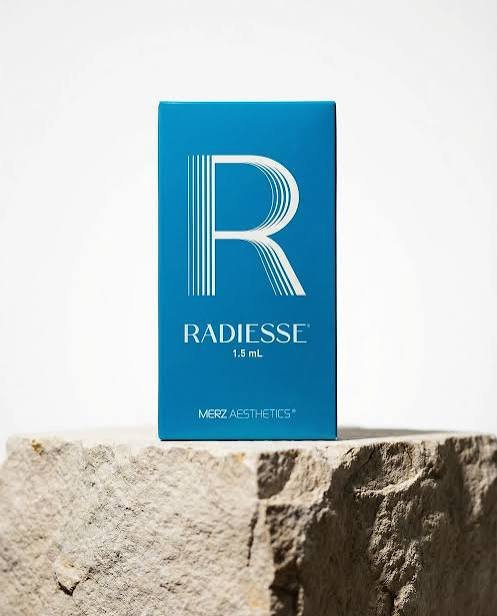
Radiesse dermal filler and calcium hydroxylapatite information
Radiesse is an injectable dermal filler that has become well known in aesthetic medicine for its distinctive calcium hydroxylapatite-based formulation. Unlike hyaluronic acid fillers, Radiesse uses calcium hydroxylapatite (CaHA) microspheres suspended in a gel carrier.
This unique composition has made Radiesse an interesting option for aesthetic professionals and people researching facial volume, contouring, and skin-quality treatments.
Radiesse has been used for specific aesthetic indications, and its properties differ from those of other dermal filler materials. Understanding these differences is important before considering any injectable aesthetic procedure.
At DermaScience Pro, our goal is to provide clear, responsible information about aesthetic and wellness products. Our educational resources cover dermal fillers, botulinum products, peptides, weight-loss products, and premium supplements.
This guide explores 7 important facts about Radiesse, including what it is, how it differs from other fillers, its composition, potential applications, safety considerations, and important questions to ask before treatment.
What Is Radiesse?
Radiesse is an injectable dermal filler containing calcium hydroxylapatite (CaHA) microspheres in a water-based gel carrier.
Calcium hydroxylapatite is a mineral-like material that is also naturally found in the human body, particularly in bones and teeth.
In Radiesse, the CaHA microspheres are formulated into an injectable gel designed for specific aesthetic and medical applications.
The product’s composition gives it characteristics that differ from hyaluronic acid-based dermal fillers such as Restylane and other filler brands.
Because different dermal fillers have different compositions and indications, product selection should always be based on the specific treatment objective and professional assessment.
7 Important Facts About Radiesse
1. Radiesse Uses Calcium Hydroxylapatite
The most important feature of Radiesse is its active filler material: calcium hydroxylapatite.
CaHA has a long history of use in medicine and is chemically similar to minerals naturally found in the human body.
Within Radiesse, the CaHA microspheres are suspended in a gel carrier. After injection, the product provides immediate volumizing effects while the gel component is gradually processed by the body.
The properties of CaHA make Radiesse different from hyaluronic acid fillers and other injectable materials.
Understanding the underlying material can help consumers better understand why different fillers may be selected for different aesthetic applications.
2. Radiesse Can Provide Volume and Contour
Radiesse has been used for specific facial aesthetic applications involving volume and contour.
Depending on the product and its approved indication, it may be used to improve the appearance of areas affected by volume loss or to enhance certain facial contours.
The precise indications can vary by country and product formulation, so consumers should always review the current official labeling applicable to their location.
A qualified healthcare professional can determine whether a particular product is appropriate for the desired treatment area.
3. Radiesse Is Different From Hyaluronic Acid Fillers
Not all dermal fillers work in exactly the same way.
Hyaluronic acid fillers are based on hyaluronic acid, a naturally occurring substance that has a strong association with water retention.
Radiesse, by contrast, uses calcium hydroxylapatite microspheres in a gel carrier.
This difference affects the physical characteristics of the products, how they are selected, and how they may be used.
For someone researching dermal fillers, comparing the material, intended application, expected duration, potential risks, and professional recommendations is more useful than assuming all fillers are interchangeable.
4. Radiesse Has Also Been Studied for Skin Quality
In addition to its volumizing properties, calcium hydroxylapatite has attracted interest in research concerning skin quality.
Radiesse may be used in certain formulations or techniques intended to improve the appearance of skin through collagen-related processes. Some professional applications involve dilution or different formulation approaches, depending on the intended use.
However, consumers should distinguish between established product indications and emerging techniques.
A particular technique may be discussed in aesthetic medicine without having the same regulatory status as an officially approved indication.
For this reason, treatment decisions should be based on the specific product, technique, provider expertise, and local regulatory requirements.
5. Treatment Requires Professional Expertise
Radiesse is an injectable medical product and should not be treated like an ordinary skincare product.
The face contains complex networks of blood vessels, nerves, muscles, and other anatomical structures. Injection into or around these structures requires appropriate anatomical knowledge and technical training.
The FDA warns that accidental injection of dermal filler into a blood vessel can result in serious complications, including tissue damage, vision abnormalities, blindness, and stroke.
Choosing an appropriately qualified and experienced healthcare professional is therefore an important part of responsible filler treatment.
6. Radiesse Has Potential Side Effects and Risks
As with other injectable dermal fillers, Radiesse can cause temporary reactions.
Common reactions can include:
Redness
Swelling
Bruising
Tenderness
Pain or discomfort
Itching
Firmness around the treatment area
More serious complications are possible, although some are uncommon.
These can include infection, nodules, allergic reactions, tissue damage, and vascular complications.
Anyone considering Radiesse should discuss potential risks and benefits with a qualified healthcare professional before treatment.
The FDA recommends that consumers understand the potential risks associated with dermal fillers and receive treatment from an appropriately licensed healthcare provider.
7. Individual Assessment Is Essential
There is no single dermal filler that is appropriate for every person or every facial area.
Radiesse has specific characteristics that may make it appropriate for certain applications, while another filler may be more suitable for a different goal.
A professional consultation should consider factors such as:
Treatment area
Facial anatomy
Desired aesthetic result
Previous cosmetic procedures
Medical history
Allergies
Medications
Skin condition
Product indication
Potential risks
A personalized assessment can help establish realistic expectations and determine whether an injectable filler is appropriate.
What Is Calcium Hydroxylapatite?
Calcium hydroxylapatite, commonly abbreviated as CaHA, is a calcium-based material that resembles the mineral component naturally found in human bones.
Its medical use extends beyond aesthetic medicine. In dermal filler technology, CaHA is formulated into injectable products with characteristics suitable for specific applications.
The calcium hydroxylapatite microspheres in Radiesse are suspended within a gel carrier.
This formulation allows the product to provide an immediate volumizing effect while also being investigated and used in applications involving longer-term changes in tissue appearance.
Radiesse and Facial Contouring
Facial contouring is one of the reasons people research Radiesse.
Changes in facial volume can occur naturally over time. Some people seek aesthetic treatments to address areas of volume loss or to create a more defined appearance.
The suitability of Radiesse depends on the specific anatomical area and the professional’s assessment.
A conservative approach is often important in aesthetic medicine because the objective should be a balanced result that fits the individual’s facial structure and goals.
Radiesse Compared With Other Dermal Fillers
Radiesse belongs to a broader category of injectable aesthetic products.
Some dermal fillers are based on hyaluronic acid, while others use different materials such as calcium hydroxylapatite or other biocompatible substances.
The choice between products can depend on the intended treatment area, desired effect, product characteristics, previous treatments, and provider experience.
Rather than selecting a filler based solely on brand popularity, consumers should understand the specific product and why it has been recommended.
Radiesse at DermaScience Pro
At DermaScience Pro, we provide educational information about modern aesthetic and wellness product categories.
Our platform covers dermal fillers, botulinum products, peptides, weight-loss products, and premium supplements.
If you are researching Radiesse and other dermal filler products, visit the [DermaScience Pro Shop] to explore our available product categories.
You can also learn about our approach through [DermaScience Pro Services], discover more educational content on the [DermaScience Pro Blog], or learn more about our company through [About DermaScience Pro].
For general questions about our website and product information, visit [Contact DermaScience Pro].
What Should You Ask Before a Radiesse Treatment?
Before undergoing a Radiesse procedure, consider discussing the following questions with your healthcare professional:
Is Radiesse appropriate for my treatment goals?
Which specific Radiesse product is being considered?
What area will be treated?
What results are realistically expected?
How long might the results last?
What common side effects should I expect?
What serious complications are possible?
What qualifications and experience does the injector have?
What should I do if I experience an unexpected reaction?
What aftercare instructions should I follow?
Having an open conversation can help you understand the procedure and establish realistic expectations.
Frequently Asked Questions About Radiesse
What is Radiesse?
Radiesse is an injectable dermal filler containing calcium hydroxylapatite microspheres suspended in a gel carrier. It is used for specific aesthetic and medical applications depending on the product and regulatory authorization.
What is Radiesse made from?
Radiesse uses calcium hydroxylapatite, commonly abbreviated as CaHA, as its primary filler material.
Is Radiesse a hyaluronic acid filler?
No. Radiesse is primarily a calcium hydroxylapatite-based dermal filler, whereas products such as many Restylane formulations use hyaluronic acid.
What is Radiesse used for?
Depending on the specific product and regulatory authorization, Radiesse may be used for particular facial volume and contouring applications. Certain formulations and techniques may also be used for skin-quality applications.
How long does Radiesse last?
The duration of results can vary between individuals and depends on factors such as the treatment area, product, amount used, injection technique, metabolism, and other considerations. A qualified healthcare professional can provide product-specific information.
Is Radiesse safe?
Radiesse has known risks and potential side effects, as do other injectable dermal fillers. Temporary reactions such as swelling, redness, bruising, tenderness, and discomfort may occur. Rare but serious complications are also possible.
Can Radiesse be injected anywhere on the face?
No. Dermal fillers have specific product indications, and different anatomical areas carry different considerations. Treatment should be planned and performed by an appropriately qualified healthcare professional.
Final Thoughts on Radiesse
Radiesse is a distinctive dermal filler because it uses calcium hydroxylapatite rather than hyaluronic acid as its primary filler material.
Its unique formulation has made it an important product in aesthetic medicine, particularly for selected applications involving facial volume and contouring.
However, choosing Radiesse—or any other dermal filler—requires careful consideration. Product composition, approved indications, treatment area, professional experience, individual anatomy, potential benefits, and possible risks should all be discussed before treatment.
At DermaScience Pro, we believe that better aesthetic decisions begin with clear and responsible information. Our goal is to help readers understand modern aesthetic products while encouraging consultation with appropriately qualified healthcare professionals.
Explore the DermaScience Pro Blog for more educational information about dermal fillers, botulinum products, peptides, weight-loss products, and premium supplements.
Important: This article is provided for general educational and informational purposes only. It is not medical advice and does not diagnose, treat, prevent, or cure any disease or medical condition. Dermal filler procedures carry risks. Always consult an appropriately qualified healthcare professional and review current official product information before treatment.
